“The quality of your drinking water is just as important as its quantity,” said Mahatma Gandhi. He stressed the importance of clean drinking water. In today’s world, pollution and contaminants are rising, making clean water essential for health.
Choosing the right purification system can be tough with so many options. This article will help you make a smart choice for your home or business. For any questions, call 9582382261 or email vijay@dalmiaalkalinerosystem.in.
Key Takeaways
- Understand the importance of clean drinking water for health.
- Learn about different types of water purification systems.
- Discover key factors to consider when choosing a purification system.
- Find out how to select the right system for your home or business.
- Get insights into the benefits of using an alkaline ro water purifier.
Understanding Your Water Quality Needs
Before picking a water purification system, it’s key to check your water’s quality. Knowing what your water needs is vital. This helps choose the best ro system for home for your water.
How to Test Your Water Quality at Home
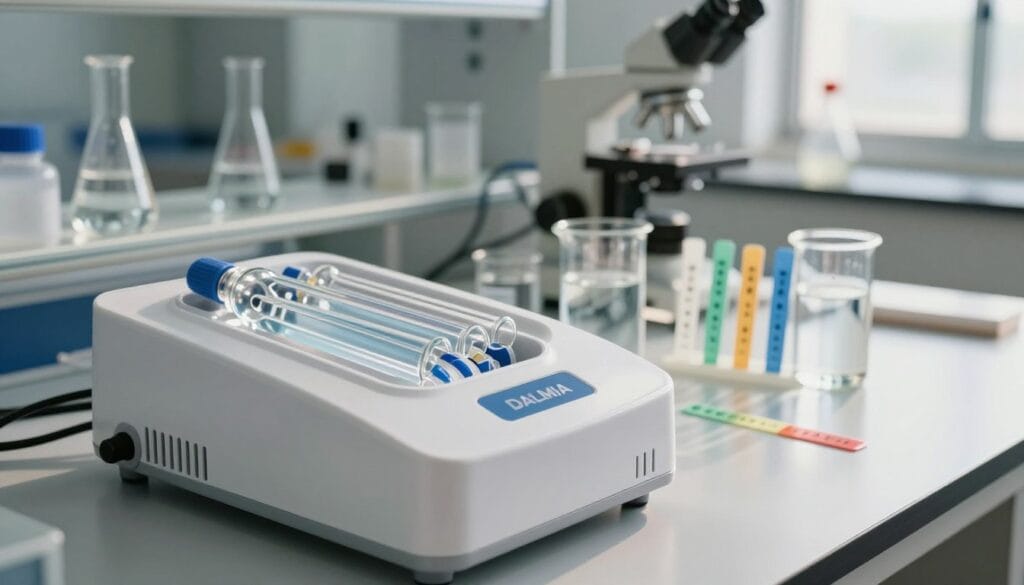
Testing your water at home is easy with simple tools. Start with a TDS (Total Dissolved Solids) meter. It measures dissolved solids in your water.
Using TDS Meters and Water Testing Kits
TDS meters are quick and easy for water purity checks. Water testing kits can spot specific contaminants. For detailed tests, get a professional service.
Interpreting Water Test Results
Understanding your test results is key. High TDS levels might mean you need a more advanced system, like an ro system for home. Knowing your water TDS and RO selection criteria helps you choose wisely.
Common Water Contaminants in Indian Water Sources
Indian water sources have many contaminants, like heavy metals, bacteria, and viruses. Water quality varies by region.
Regional Water Quality Challenges
India’s different regions face unique water quality issues. Some areas have high arsenic or fluoride levels.
Health Risks of Contaminated Water
Drinking contaminated water can cause serious health problems, including waterborne diseases. It’s important to know these risks to stay healthy.
| Contaminant | Health Risk | Recommended Action |
|---|---|---|
| Heavy Metals | Cancer, Neurological Damage | Use RO System |
| Bacteria/Viruses | Waterborne Diseases | UV or UF Treatment |
| High TDS | Kidney Stones, Other Issues | RO or Demineralization |
For any questions or to talk about your water quality needs, call 9582382261 or email vijay@dalmiaalkalinerosystem.in.
Water Purification Technologies Explained
There are many water purification technologies out there. It’s important to know how they work. This helps you choose the right system for your home or business.
Traditional Filtration Methods
For years, traditional methods have cleaned water. These include sediment and carbon filters, as well as UV and UF purification.
Sediment and Carbon Filters
Sediment filters get rid of particles. Carbon filters remove chlorine, taste, and odor. They attract and hold onto chemicals, making water taste better.
UV and UF Purification
UV purification kills bacteria and viruses with ultraviolet light. UF (Ultrafiltration) uses a membrane to remove contaminants.
Reverse Osmosis (RO) Technology
Reverse Osmosis (RO) is a well-known method. It uses a membrane to remove many contaminants, including dissolved solids and bacteria.
How RO Systems Remove Contaminants
RO systems apply pressure to water. This forces it through a membrane, filtering out impurities. They can remove up to 99% of contaminants.
Limitations of Standard RO Systems
RO systems are effective but can remove good minerals too. This can make water acidic. Alkaline RO systems add back beneficial minerals.
Advanced Purification Technologies
There are advanced technologies beyond traditional methods and RO. These include mineral addition systems and smart purification systems.
Mineral Addition Systems
Mineral addition systems add good minerals back into water. This improves its taste and nutritional value.
Smart Purification Systems
Smart purification systems use IoT and sensors. They monitor and adjust the purification process in real-time. This ensures the best water quality.
For more information on commercial RO systems or the difference between RO and alkaline RO, call 9582382261. Or email vijay@dalmiaalkalinerosystem.in.
Alkaline RO Water Purifier: The Complete Solution
An alkaline RO water purifier is a top choice for clean drinking water. It purifies water and adds good minerals, improving its quality and pH level.
The Science Behind Alkaline Water
Alkaline water is popular for its health benefits. Its pH level and mineral content make it special.
pH Levels and Their Importance
The pH of water shows if it’s acidic or alkaline. Alkaline water has a pH of 8 or 9. This helps balance the body’s pH.
Antioxidant Properties of Alkaline Water
Alkaline water fights free radicals in the body. This can improve health and well-being. Minerals like calcium and magnesium help with this.
How Alkaline RO Systems Work
Alkaline RO systems use reverse osmosis and extra steps to improve water quality. Let’s look at how they work.
Multi-Stage Filtration Process
These systems have pre-filtration, reverse osmosis, and post-filtration. This removes bad stuff and adds good minerals.
Mineral Addition Technology
Mineral addition tech is key in these systems. It adds back minerals like calcium and magnesium. This makes the water taste better and is healthier.
Health Benefits of Alkaline RO Water
Drinking alkaline RO water can be good for you. It can neutralize acidity, improve hydration, and add essential minerals. For better water, an alkaline RO system is a great pick. For more info on the best RO system in India, call 9582382261 or email vijay@dalmiaalkalinerosystem.in.
How to Determine the Right System Size for Your Needs
First, understand your water needs to pick the right RO system. Consider several factors that affect your water use.
Calculating Your Daily Water Consumption
To find the right RO system size, start by figuring out your daily water use. This changes a lot between homes and businesses.
Residential Usage Patterns
In homes, water use is usually between 200 to 500 liters a day. This depends on how many people live there and their water habits.
Commercial Water Requirements
Businesses use a lot more water. A small office might need 500 to 1000 liters a day. Bigger places or restaurants use even more.
Storage Capacity Considerations
Think about the storage tank size when picking an RO system. A bigger tank helps manage water demand better, keeping a steady supply.
“The right storage capacity ensures that you have enough purified water to meet your needs, even during peak usage times.”
Flow Rate and Recovery Ratio Explained
Flow rate and recovery ratio are key when choosing an RO system.
Understanding GPD (Gallons Per Day) Ratings
GPD ratings show how much water an RO system can clean in a day. Homes usually need a 50-100 GPD system. Businesses need much higher ratings.
Optimizing Water Efficiency
Being water-efficient means more than just the RO system. Regular upkeep and checks keep it running well.
| Usage Type | Daily Water Consumption | Recommended GPD Rating |
|---|---|---|
| Residential | 200-500 liters | 50-100 GPD |
| Commercial (Small) | 500-1000 liters | 100-200 GPD |
| Commercial (Large) | 1000+ liters | 200+ GPD |
For any questions or to talk about your needs, call 9582382261 or email vijay@dalmiaalkalinerosystem.in.
Selecting the Best RO System for Your Home
Choosing the right RO system for your home is important. You need to think about several factors. This ensures you pick a system that fits your needs perfectly.
Top Alkaline RO Models for Indian Households
Indian homes can benefit from alkaline RO systems. These systems purify and make water more alkaline. Look for models with advanced purification and remineralization.
Under-Counter vs. Countertop Systems
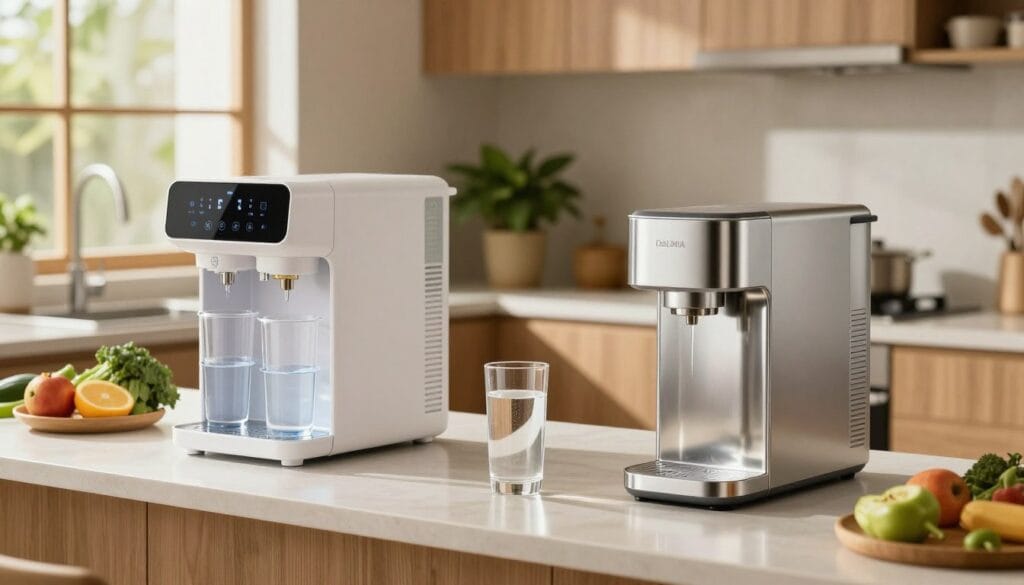
Deciding between under-counter and countertop systems is key. Under-counter systems save space and look sleek. Countertop systems are simpler to install and maintain.
Smart Features and Modern Conveniences
Today’s RO systems have smart features. These include digital displays, automatic shut-off, and alerts for maintenance. These features make using the system easier and ensure it works well.
| Feature | Under-Counter | Countertop |
|---|---|---|
| Installation | Complex, requires professional help | Simple, DIY-friendly |
| Space | Saves counter space | Occupies counter space |
| Maintenance | Filters are often hidden | Easy filter access |
Matching Systems to Different Water TDS Levels
The TDS level in your water is important. It helps choose the right RO system. You want a system that can handle your water’s TDS level well.
Low TDS Solutions
For low TDS water, a high-capacity system might not be needed. Look for a system that focuses on purification and adding minerals back in.
High TDS Solutions
For high TDS water, you need a system with strong filtration. Find systems with high TDS rejection rates and multiple purification stages.
For more information or to find the best RO system for your home, call 9582382261. Or email vijay@dalmiaalkalinerosystem.in.
Commercial RO Systems for Businesses
As a business owner, it’s key to have clean drinking water for your team and customers. Commercial RO systems are made for different business needs.
Industry-Specific Water Purification Needs
Every business has its own water needs. For example, hotels need systems that can handle lots of water for drinking, cooking, and more.
Hospitality Sector Requirements
The hospitality world needs high-capacity water purification systems. These must clean water well for guests.
Office and Institutional Solutions
Offices and institutions want reliable, easy-to-maintain systems. They need to provide clean water for everyone.
Industrial-Grade Alkaline RO Systems
Industrial-grade alkaline RO systems are for businesses needing top-quality water. They purify and alkalize water, making it better for drinking.
High-Capacity Commercial Models
Big businesses should look at high-capacity RO models. They have high flow rates and efficient recovery ratios.
Customization Options for Businesses
Many businesses want custom water solutions. Manufacturers offer many options to fit specific needs.
For more info on commercial RO systems, call 9582382261 or email vijay@dalmiaalkalinerosystem.in.
Installation and Maintenance Best Practices
Getting your alkaline RO water purifier installed right and keeping it maintained is key. It makes sure your system lasts longer and keeps your water clean.
Professional Installation Process
It’s best to have pros install your alkaline RO water purifier. This avoids any problems or damage. It also makes sure everything is set up correctly for the best results.
Space Requirements and Plumbing Considerations
Check the space for your purifier before installing it. Make sure it’s easy to get to for upkeep. Also, think about the plumbing, like where to get water and where to drain it.
Electrical and Drainage Requirements
The spot for your purifier needs the right electrical and drainage setup. This keeps it running safely and efficiently.
Essential Maintenance Schedule
Keeping up with maintenance is important for your alkaline RO system. This means changing filters on time and cleaning the system.
Filter Replacement Timelines
Change your filters every 6 to 12 months, as the maker suggests. This depends on how much you use it and the water quality.
Sanitization and System Cleaning
Sanitize your system now and then to stop bacteria and keep water clean. Do this as the maker says.
Troubleshooting Common Issues
Knowing how to fix common problems helps you act fast. This cuts down on downtime.
Addressing Low Water Pressure
Low water pressure can mess with your RO system’s work. Look for clogs or kinks in the pipes to fix it.
Dealing with Unusual Taste or Odor
Unusual tastes or smells mean it’s time for a filter change or system clean. Regular upkeep stops these problems.
| Maintenance Task | Frequency | Importance |
|---|---|---|
| Filter Replacement | Every 6-12 months | High |
| System Sanitization | Every 3-6 months | High |
| Checking for Leaks | Monthly | Medium |
For any questions or to book a pro for installation and upkeep, call 9582382261 or email vijay@dalmiaalkalinerosystem.in.
Cost Analysis and Return on Investment
When you think about getting a water purification system, knowing the costs is key. The total cost isn’t just the price you pay at first. It includes other important factors too.
Initial Investment Considerations
The cost of an RO system starts with several main parts. Knowing these costs helps you plan your budget better.
Purchase Costs Across Different Models
RO systems come in different prices, depending on the model and brand. For example, alkaline RO systems might cost more but offer extra health benefits.
Installation and Setup Expenses
The cost to install an RO system can change based on how complex it is and the installer’s fees. It’s wise to talk to experts like those at Dalmia Alkaline RO System. They can be reached at 9582382261 for any questions.
Ongoing Operational Costs
After buying your RO system, there are ongoing costs to think about.
Filter Replacement Expenses
You’ll need to replace filters regularly to keep your system working well. The cost of these filters can vary based on the system’s brand and type.
Electricity and Water Consumption
RO systems use electricity and water. Knowing these costs helps you see how efficient and cost-effective the system is.
Long-Term Health and Financial Benefits
Getting an RO system has many long-term benefits for your health and wallet.
Reduced Medical Expenses
RO systems can help lower the risk of waterborne diseases. This can lead to fewer medical bills over time.
Environmental Impact and Sustainability
Using an RO system also helps the environment. It reduces the need for bottled water, cutting down on plastic waste.
| Cost Component | Initial Cost | Ongoing Annual Cost |
|---|---|---|
| System Purchase | $200-$1000 | – |
| Filter Replacements | – | $50-$100 |
| Electricity Consumption | – | $20-$50 |
| Maintenance | – | $20-$50 |
If you have questions or want to talk about your needs, call 9582382261 or email vijay@dalmiaalkalinerosystem.in. A good RO system, like those from Dalmia Alkaline RO System, can save you money and improve your health.
Conclusion: Making an Informed Decision for Healthier Water
Now you know a lot about water purification systems. It’s time to pick the best alkaline ro water purifier for you. This guide will help you choose the perfect one for your home or business.
Understanding your water needs is key. Look at different purification methods and think about system size and upkeep. If you have questions or need help, call 9582382261 or email vijay@dalmiaalkalinerosystem.in.
Getting a good water purification system is a smart move for your health. Choose wisely today. Enjoy clean drinking water for many years.
FAQ
What is the difference between a standard RO system and an alkaline RO water purifier?
A standard RO system cleans water by removing impurities. An alkaline RO water purifier does more. It purifies water and adds minerals to make it alkaline.
How often should I replace the filters in my RO system?
Filter replacement depends on your water usage and the manufacturer’s advice. Pre-filters usually need changing every 3-6 months. The RO membrane might need a replacement every 1-2 years.
Can I install an RO system myself, or do I need professional help?
Some RO systems are easy to install yourself. But, if you’re not sure about plumbing and electrical, it’s best to get a professional.
What is the ideal TDS level for drinking water?
The perfect TDS level for drinking water varies. Generally, a TDS between 50-150 ppm is good for most people.
How do I determine the right RO system size for my home or business?
To find the right RO system size, think about your daily water use and storage needs. A water treatment expert can help figure out what you need.
Are alkaline RO water purifiers more expensive than standard RO systems?
Yes, alkaline RO water purifiers cost more than standard RO systems. They have extra features and add minerals. But, they also offer better taste and health benefits.
Can I use an RO system with a water softener?
Yes, you can use an RO system with a water softener. Together, they remove contaminants and minerals that make water hard.
How do I maintain my RO system to ensure optimal performance?
To keep your RO system working well, replace filters and sanitize it regularly. Also, check for leaks and follow the manufacturer’s maintenance schedule.